In the ever-evolving landscape of hip-hop, Lil Wayne remains one of the most enigmatic figures. Over the years, his lyrics have not only entertained but also puzzled fans, critics, and fellow artists. His recent statement, “Myself is bigger than me,” has once again sent shockwaves through the music community. This mysterious line, delivered during an interview and teased in his latest music snippets, has left listeners dissecting every word. What did he mean? Is it a reflection on fame, self-perception, or something much deeper?
 The Weight of Lil Wayne’s Words
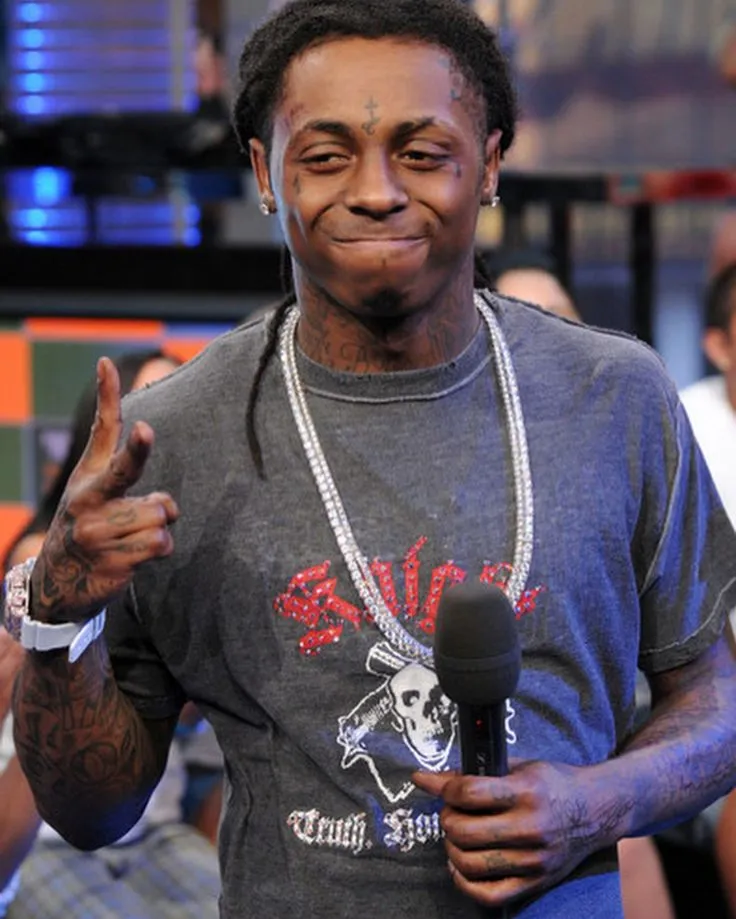
When Lil Wayne speaks, the hip-hop world listens. He has built his legacy as not just a rapper but a poet who often layers complex thoughts into seemingly simple phrases. The line “Myself is bigger than me” is a perfect example of this complexity. On the surface, it might sound like a paradox, but for Wayne, paradoxes are often where his truth resides. His long-standing reputation for crafting bars that require multiple listens has conditioned fans to approach his words like puzzles, searching for the deeper meaning beneath.
Decoding “Myself Is Bigger Than Me”
So what does this line actually mean? To fully grasp it, we must first look at the difference between “myself” and “me.” While they are technically both pronouns, “myself” often implies a reflective or deeper version of the self, perhaps even the soul or inner identity, whereas “me” could represent the outward persona—the celebrity, the public figure, or even the ego.
In this context, Lil Wayne may be suggesting that the essence of who he truly is—his core being, his creative spirit, his consciousness—has grown beyond the limitations of his public persona. The “me” that the world knows is only a fragment of the much larger entity he feels within. It’s a statement about transcendence, about being larger than fame, larger than the music industry, and even larger than the image the public consumes.
Lil Wayne and the Battle Between Ego and Essence
Wayne’s career has always been a balancing act between the persona of Lil Wayne and the man behind it, Dwayne Michael Carter Jr. This distinction has been explored subtly in his music for years. In tracks like “Mirror” featuring Bruno Mars, Wayne openly reflected on his inner struggles, rapping about looking in the mirror and questioning who he truly is. Now, with this new line, he seems to be addressing a similar theme but with an evolved understanding of himself.
The ego—represented by “me”—is often shaped by external forces like fame, public opinion, and material success. But the self—represented by “myself”—is deeper, spiritual, and perhaps eternal. In Wayne’s words, it appears that the self he has discovered is far greater than the public-facing image that the world sees. It’s a profound message, suggesting that despite the trappings of celebrity, he’s found a sense of inner growth that surpasses even his legendary career.
Fan Reactions: Confusion and Curiosity
As expected, fans flooded social media with theories, interpretations, and plenty of memes in response to Wayne’s words. Some saw it as a spiritual statement, linking it to concepts of self-realization found in philosophy and religion. Others viewed it as a reflection on fame, arguing that Wayne was commenting on the way the industry distorts the identity of artists.
Twitter and Instagram have been buzzing with debates, with one user writing, “Wayne’s on some next-level enlightenment stuff. ‘Myself is bigger than me’ sounds like something a monk would say.” Another commented, “Only Wayne can make a line that sounds crazy at first but makes you rethink your whole existence.”
What’s clear is that the line has succeeded in its purpose: to make people think. Lil Wayne has always excelled at creating lines that transcend rap and become part of cultural conversations, and this is no exception.
Context: When and Where Did Wayne Say It?
The cryptic phrase emerged during a recent interview, where Wayne was asked about his legacy and how he views himself after decades in the industry. While he didn’t expand on the statement, his delivery was calm and reflective, leaving fans to wonder if this was something he had been contemplating for a long time.
Shortly after, snippets of unreleased tracks surfaced online where the line appeared again, this time woven into a verse. The repetition of the phrase suggests it’s more than just an offhand remark—it’s a theme Wayne is exploring deeply, possibly in his upcoming music.
A Philosophical Undertone
Interestingly, the line has philosophical undertones that align with ideas from thinkers across cultures. Philosophers and spiritual leaders often talk about the difference between the ego and the true self, the latter being the higher consciousness that transcends individual identity. In this sense, Lil Wayne might be aligning himself with this tradition of thought, consciously or unconsciously.
For a rapper whose lyrics often revolve around street life, success, and bravado, such an existential statement might seem out of place. But if you look closely, Wayne has always sprinkled his music with philosophical reflections, masked behind his clever wordplay. This is the same artist who once said, “I am not a human being.” Clearly, Wayne has long been interested in exploring what it means to exist beyond the physical self.
The Evolution of Lil Wayne
To understand this cryptic line fully, one must also consider Lil Wayne’s evolution as an artist and a person. From his early days as a young prodigy at Cash Money Records to becoming a cultural icon and mentor to some of today’s biggest stars, Wayne has experienced nearly every facet of the music industry. He’s endured legal battles, health scares, and personal challenges, yet he continues to thrive creatively.
The Wayne of 2025 is not the same as the Wayne of 2005. His life experiences have undoubtedly shaped his perspective. This statement—“Myself is bigger than me”—may be his way of acknowledging that growth. It’s not about rejecting his old self but about recognizing that he has become something far greater than the persona he once built for survival and success.
What This Means for His Music
If this statement is any indication, Lil Wayne’s future music could dive even deeper into themes of self-reflection and philosophical inquiry. Fans are already speculating that his next project will be one of his most introspective yet, blending his signature wordplay with profound commentary on life, identity, and existence.
It wouldn’t be the first time Wayne has used his art to explore his inner world. From “How to Love” to “Open Letter”, he has shown that he can balance his hardcore rap persona with deeply emotional and reflective tracks. But this time, he seems poised to go even further, perhaps blurring the lines between music and a personal manifesto.
Why This Line Matters
In a culture that often prioritizes quick hits and catchy hooks over substance, Lil Wayne continues to challenge listeners to think. The line “Myself is bigger than me” stands out because it isn’t just a lyric—it’s a statement about existence, identity, and growth. It forces us to question our own understanding of the self and how we define who we are versus who we could be.
For Wayne, it may be a declaration of personal liberation. For his fans, it’s an invitation to join him on a journey of deeper self-exploration. In either case, it cements his place as not just a rapper but a thinker—someone whose words carry weight beyond the beat.
Closing Thoughts
Lil Wayne has never been afraid to push boundaries, whether musically or philosophically. With this latest statement, he has once again proven that his artistry goes beyond the surface. “Myself is bigger than me” isn’t just a cryptic line—it’s a bold proclamation of inner growth and self-awareness, offering a glimpse into the mind of a man who refuses to be defined by fame alone.
As fans continue to decode and debate its meaning, one thing is certain: Wayne has succeeded in sparking a conversation that transcends hip-hop. And in doing so, he reminds us all that sometimes, the most powerful lines are the ones that make us pause, reflect, and reconsider what we thought we knew about ourselves—and about him.a